Key Takeaways
Dental hygienists clean teeth, but they also educate patients, help dentists during advanced procedures, and ensure that office operations run smoothly.
Requirements vary by state, but dental hygienists usually need to earn an associate degree and get licensed to work in their state.
The U.S. Bureau of Labor Statistics (BLS) projects an average of 15,000 job openings for dental hygienists every year between 2025 and 2035.
Basic oral health is important to a healthy life, but according to a 2026 survey conducted by Procter & Gamble Co. and the American Academy of Family Physicians (AAFP), only 3% of American adults understand that oral health is tied to overall health. Oral disease can affect everything from your heart to your brain, meaning this knowledge gap can be deadly — and dental hygienists are vital to closing it.
Dental hygienists clean teeth, but their job is about so much more than that. They also educate patients and empower them to take control of their health. If you are interested in doing the same for dozens of people every week, here is a glimpse into a day in the life of a dental hygienist, the training it takes to become one, and what the job market looks like for this booming profession.
What Does a Typical Day for Dental Hygienists Look Like?
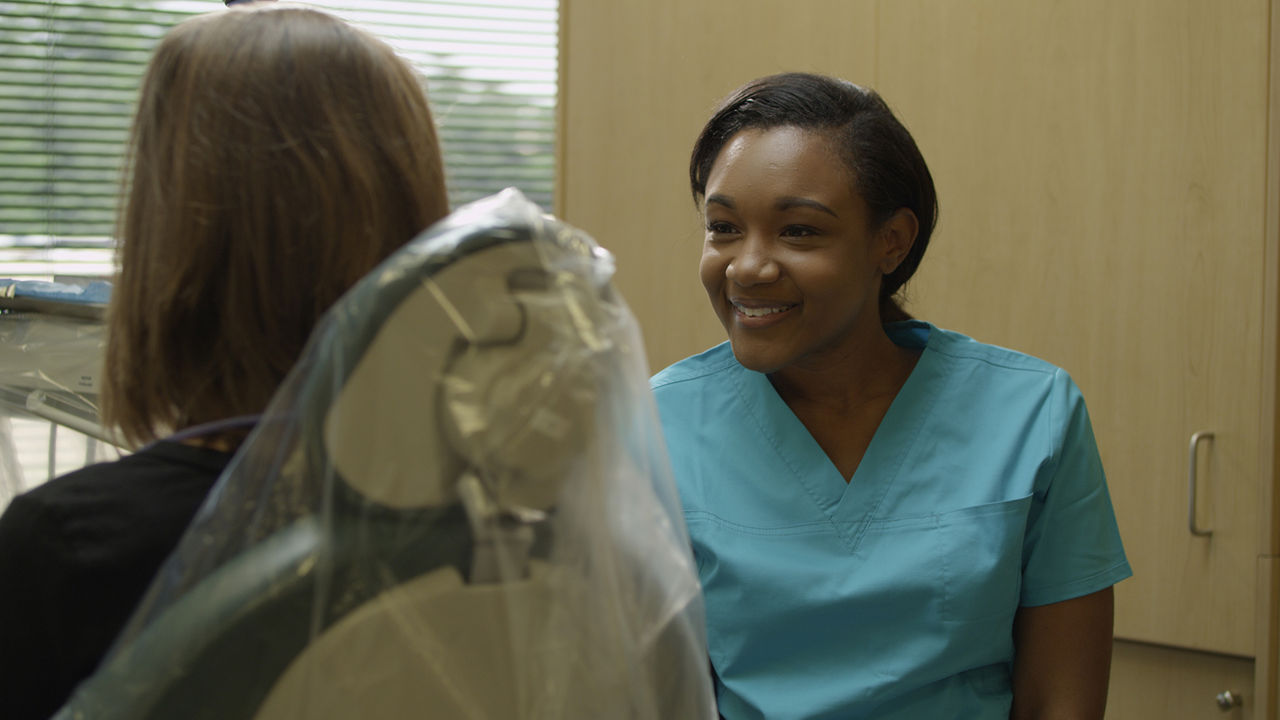
The primary role of a dental hygienist is to provide preventive oral care, including deep cleanings. They assess a patient’s oral health, take X-rays when needed, and create a dental hygiene treatment plan. While they work under the direction of a dentist and are not able to make diagnostic decisions, they work on their own, typically treating about 10 patients each workday.
However, a day in the life of a dental hygienist involves more than cleaning teeth. These skilled healthcare workers can also act as clinicians, educators, researchers, administrators, managers, and advocates.
For example, a hygienist may teach a kindergartner how to brush their teeth or help a senior citizen properly care for their dentures. In between serving patients directly, they can be found organizing records or checking inventory. They may also support dentists by taking patients’ vital signs, administering topical anesthetics or nitrous oxide, and applying oral stitches, as permitted by state law.
Dental Hygienist Responsibilities and Job Requirements
Dental hygienists work alongside dental assistants and dentists in small private dental practices, large corporate dental practices, and community health clinics. Their daily routines can look a little different from place to place, but their core job duties remain similar across settings.
Common dental hygienist responsibilities include:
Performing routine cleanings
Screening patients and recording their medical histories
Using and maintaining equipment such as motorized polishers, suction devices, picks, mirrors, and lasers
Educating patients about oral health and helping them create treatment plans
Taking X-rays and dental impressions
Interpreting radiographs
Preparing patients for procedures performed by a dentist
Supporting dentists as they perform root canals, fillings, and other procedures
Ordering supplies and organizing records
Becoming a dental hygienist typically requires an associate degree in dental hygiene. Many states also require hygienists to pass a credentialing exam, and all states require them to obtain a license to practice from their state licensing board. In addition to knowing the technical side of the job, hygienists need strong people and organizational skills.
Dental Hygienist Job Growth
Dental hygiene is important to the success of any dental office. Being a dental hygienist is both a respected and an in-demand occupation. In fact, the U.S. Bureau of Labor Statistics (BLS) projects employment of dental hygienists to grow 8% between 2025 and 2035 — more than double the average 3% growth rate projected for all occupations. This is equivalent to an average of 15,000 job openings per year.
Learn More About Becoming a Dental Hygienist
If your goal is to join the ranks of the thousands of dental hygienists who help keep patients healthy, Fortis can help. Fortis offers Dental Hygienist programs at campuses in Alabama, Georgia, Maryland, Pennsylvania, and Utah.
Students in these programs take classes on radiology, periodontology, and many other areas today’s hygienists must master. This hands-on curriculum is designed to help students meet state requirements and excel in patient care wherever they go.
To find out more about these flexible hybrid programs, request information from Fortis today.
Recommended Readings
7 Dental Hygienist Skills
How Is AI Used in Dentistry?
What Does It Mean to Be Part of the Dental Office Team?